CBD Muscle Recovery Cream: Ingredients, Labels, and What to Know
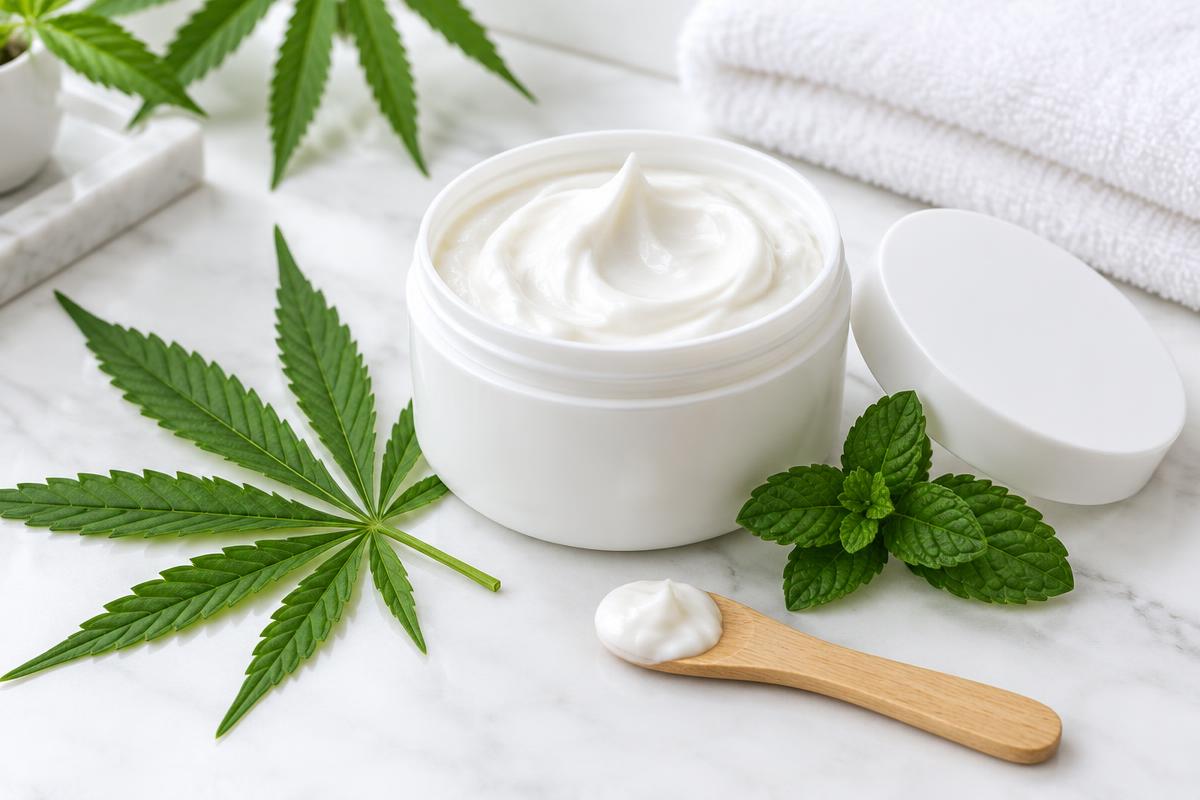
Say you finish a workout and see a "CBD muscle recovery cream" online. The label lists CBD, menthol, oils, and a few other things. What does each one do? Is the cream worth a look?
Check the stated CBD amount, the full ingredient list, what the other active ingredients are for, the directions and warnings, and any lab reports. A cream sold for "muscle recovery" is not proven to speed up muscle repair. The evidence for CBD creams and muscle recovery is limited.
What Is a CBD Muscle Recovery Cream?
A topical cream is a cream you rub on your skin. You do not swallow it.
CBD is short for cannabidiol. It is a compound found in the cannabis plant. In a cream, a maker mixes CBD extract in with the oils, water, and other ingredients.
Formulas differ from brand to brand. That is why you need to read the label.
The word "recovery" is a marketing word. It does not prove the cream speeds up muscle repair.
A cosmetic cream is not the same as a product sold as a drug to treat pain or another condition. Do not assume a product is FDA-approved because it is sold online. The FDA says it has seen only limited data about CBD safety, and it has approved only one prescription CBD drug, which is for seizures.
How much CBD gets through your skin can vary. It is not always known.
7 Ingredients to Check in a CBD Muscle Recovery Cream
The ingredient list tells you more than the product name. Here are seven things you may see.
1. CBD or Cannabidiol
Look for "CBD," "cannabidiol," or a similar word on the label.
Check the stated amount. Then check what it covers. A 1,000 mg jar does not mean 1,000 mg goes on your skin each time. It is the total in the whole jar.
A CBD number alone does not show that a cream works. Look for clear labeling and test results. This guide does not suggest an amount, and more CBD does not mean better recovery.
2. Menthol
Menthol can make the skin feel cool. It is used in some topical products.
If your cream has menthol, do not give CBD credit for the cooling feeling. The menthol is probably the reason.
Follow the directions and warnings. Many menthol products warn against heating pads and against using the product on damaged skin.
3. Camphor
Camphor is in some topical products. It can make skin feel cool or warm.
Check whether it is listed as an active ingredient, and follow the product's warnings. Not every CBD cream has it.
4. Carrier Oils and Moisturizers
Some formulas include:
- Hemp seed oil
- Coconut oil
- Shea butter
- Other plant oils or moisturizers
Hemp seed oil is not CBD. Seeing it on a label does not prove the cream has CBD.
If you know an ingredient bothers your skin, skip that product. Not every oil suits every skin.
5. Fragrances and Essential Oils
Some people like a scented cream. Brands add fragrance or essential oils for that reason.
But fragrances can irritate some people's skin. Essential oils are natural, and they can still cause reactions. If your skin is sensitive, a fragrance-free cream may be worth a look.
A scent is not a proven muscle recovery ingredient.
6. Preservatives and Other Ingredients
Creams often contain water, emulsifiers, and preservatives. Emulsifiers keep oil and water mixed. Preservatives help keep the cream usable.
A long ingredient list is not a bad sign by itself. A "natural" label does not automatically mean safer.
7. Other Active Ingredients
Some creams mix CBD with other active ingredients. Find each one and read what it is for and what its warnings say.
Menthol and camphor have their own effects and safety rules. Mixing ingredients does not make a cream more effective.
How to Read a CBD Muscle Cream Label
Check the CBD Amount
See whether the label gives CBD for the whole container or for another clear amount. Do not compare two creams if their numbers measure different things.
Here is a made-up example. Jar A says "500 mg CBD" and holds 50 grams of cream. Jar B says "500 mg CBD" and holds 100 grams. They have the same number, but Jar B has less CBD in each gram.
Read the Active and Inactive Ingredients
On a drug label, active ingredients are named with their purpose. Other ingredients help form the cream or do other jobs.
Do not assume CBD is an FDA-approved active ingredient for over-the-counter muscle pain.
Read the Directions and Warnings
Look for:
- How to apply the cream
- How often the label says you can use it
- Whether to keep it away from eyes or broken skin
- Whether it warns against heating pads or tight bandages
- When to stop using it and ask a medical professional
Directions differ by formula. Follow the label on your product.
Check the Company Information
See who makes the product and how to reach them. Look for clear ingredient information, batch details, directions, and a way to ask questions.
How to Check CBD Muscle Recovery Cream Lab Results
A certificate of analysis, or COA, is a report from a lab. It shows what the lab found in a sample.
Check these things:
- Does the company share a report from a lab you can identify?
- Does it match the exact product and batch?
- Does it report the CBD content?
- Does it test for THC and for contaminants?
- Does it show a report date and ways to verify it?
Not every report tests for the same things. Read the list of tests.
A lab report can help verify some details about a sample. It does not prove a cream speeds up recovery, treats pain, or suits everyone. Only call a product independently tested if a report supports it.
Does CBD Muscle Recovery Cream Actually Help Muscles Recover?
The honest answer is that we do not know.
CBD is being studied for different possible effects. But the evidence for CBD creams and muscle recovery is limited.
A cream sold for recovery is not proven to repair muscle faster. A cool or warm feeling may come from menthol or camphor, not CBD. A label or a lab report cannot show that a cream improves recovery.
Do not count on results.
If you have severe pain, big swelling, a possible injury, or symptoms that do not get better, get medical advice. Do not rely on a cream.
Are CBD Muscle Creams Safe to Use?
For many people they may be fine. But keep these points in mind:
- Any ingredient can irritate skin or cause an allergic reaction in some people.
- Some formulas have active ingredients with their own warnings.
- Do not use a cream on broken or irritated skin unless the label or a healthcare professional says it is okay.
- Keep it away from eyes and other areas the label names.
- Some topical ingredients should not be used with heating pads or tight bandages.
- CBD product quality and makeup can vary.
The FDA has warned about rare burns from over-the-counter muscle and joint rubs. The cases were linked mostly to products with menthol, or menthol with methyl salicylate. The advice was not to apply heat or tight bandages over the area, and to stop using the product if pain, swelling, or blistering appears. That warning covered products with those ingredients. It does not mean every CBD cream carries the same risk.
How much CBD goes through the skin depends on the formula and other factors. Do not assume a cream has no risk because it goes on the skin.
If you are pregnant or breastfeeding, talk to a qualified healthcare professional before using CBD products. Do the same if you take medicine or have a health condition.
Common Mistakes to Avoid When Buying CBD Muscle Recovery Cream
- Picking a cream for its high CBD number. Check what the number covers.
- Thinking "muscle recovery" means proven faster recovery. It is a claim, not proof.
- Ignoring other active ingredients. Read each one.
- Mixing up hemp seed oil and CBD. Look for a stated CBD amount.
- Skipping the directions and warnings. Read them before the first use.
- Trusting a lab claim without opening the report. Check the product and batch.
- Believing medical promises. Be wary of claims about pain, swelling, or arthritis.
- Assuming a pricier cream is better. Compare labels, not price tags.
Frequently Asked Questions About CBD Muscle Recovery Cream
- 1. What should I look for in a CBD muscle recovery cream?
- Look for clear CBD labeling, a full ingredient list, named active ingredients, directions and warnings, lab results you can check, and a company that shares its details.
- 2. Does CBD cream speed up muscle recovery?
- Reliable proof that topical CBD speeds up muscle repair is limited. No one can promise faster recovery or a certain result.
- 3. What is the difference between CBD cream and hemp seed oil cream?
- CBD is cannabidiol. Hemp seed oil is made from hemp seeds. A cream with hemp seed oil does not necessarily have meaningful amounts of CBD.
- 4. Can CBD muscle cream contain menthol?
- Yes. Some formulas include menthol and some do not. Check the ingredient list and follow the warnings.
- 5. How can I check whether a CBD cream contains the amount stated on the label?
- A lab report can verify the CBD in a tested sample. Check that the product name and batch match the one you are buying.
- 6. Can CBD muscle cream cause skin irritation?
- Yes. Creams may have fragrances, essential oils, menthol, camphor, or other ingredients that irritate some people. Follow the label and stop using the cream if a reaction happens.
Final Thoughts: Read the Label Before Choosing a CBD Muscle Cream
Before you buy, check:
- The stated CBD amount
- The full ingredient list
- Any other active ingredients
- The directions and warnings
- Lab reports you can verify
- The company's product information
A label helps you see what you are putting on your skin. It cannot prove a cream improves muscle recovery. Compare products with care, and do not let bold claims decide for you.
Sources
- FDA, "What You Need to Know (And What We're Working to Find Out) About Products Containing Cannabis or Cannabis-derived Compounds, Including CBD"
- MDedge, "Topical Pain Relievers: FDA Issues Burn Warning"
- Example over-the-counter product labels on DrugCentral showing standard warnings against tight bandages and heating pads