CBD Bath Bombs: What to Know Before Buying and How to Choose
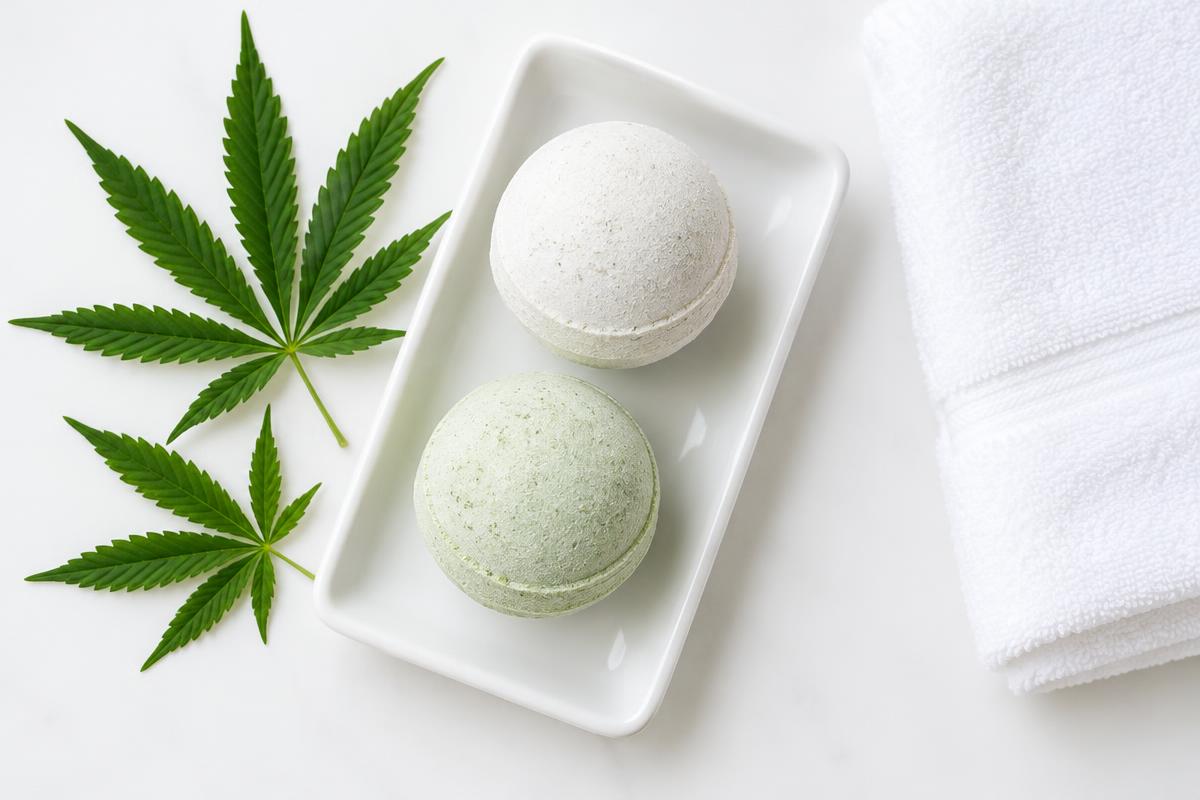
CBD bath bombs are fizzy bath products made with cannabidiol (CBD), a compound from the hemp plant. You drop one in warm water, it fizzes, and the bath fills with color and scent.
People like them for a simple reason. A warm bath is a nice way to slow down, and CBD is everywhere right now. Putting the two together feels natural.
But there's a lot of hype here. Some labels promise far more than the science can back up. In this guide, you'll learn what's inside these products, how to read a label and a lab report, what safety issues to watch for, and how to choose a CBD bath bomb without wasting money.
What Are CBD Bath Bombs?
A bath bomb is a hard, round ball of dry ingredients. Mostly it's baking soda and citric acid. When it hits water, the two react and make fizzy bubbles. Most also contain oils, scent, and color.
CBD, short for cannabidiol, is one of many compounds in the cannabis plant. It's not the one that gets you high. That's THC. Most CBD products sold in the U.S. come from hemp, a type of cannabis with very little THC.
In a CBD bath bomb, the maker mixes CBD extract into the dry ingredients, usually with a carrier oil. The oil helps spread the CBD through the bomb.
CBD is not the same as hemp seed oil. Hemp seed oil is pressed from the seeds. It's a nice skin moisturizer, but it has little to no CBD. CBD comes from the flowers, leaves, and stalks. If a label says "hemp oil" and never mentions CBD or milligrams, you probably aren't getting CBD at all.
How Do CBD Bath Bombs Work?
The fizz part is simple chemistry. The bomb touches water and the baking soda and citric acid react. The bomb breaks apart, and the oils, color, and scent spread out in the tub.
The CBD part is much less clear.
CBD doesn't dissolve well in water. It mixes with oil, not water. So much of it may float on top, stick to the tub, or sit in the oily film on the surface. How much actually gets into your skin during a bath is unknown. Researchers haven't studied bath bombs much.
There's also something to keep in mind about research. Most of what we know about CBD comes from studies of oral products, like oils and capsules. Swallowed CBD goes through your digestive system and liver. A bath works very differently. Your skin is a tough barrier, and you're in the water for a short time. So results from oral CBD don't carry over to bath products.
Some studies on creams and lotions show CBD can enter the top layers of skin. But that doesn't mean it reaches your bloodstream in a meaningful amount, and it doesn't tell us what a bath does.
What Are the Possible Benefits of CBD Bath Bombs?
Here's the honest answer: there's very little research on CBD bath bombs specifically. Anyone who promises a particular result is going beyond the evidence.
What we can say is that many people enjoy baths. A warm soak, a quiet room, and some time away from your phone can feel relaxing. That's true with or without CBD.
So when you feel calm after a CBD bath, it's hard to know what caused it. It could be the warm water. It could be the scent. It could be the quiet time. It could be CBD. Right now, nobody can say how much credit CBD deserves.
A fair way to think about it: a CBD bath bomb is a self-care product. It might be a nice treat. It's not a treatment for pain, anxiety, sleep problems, or any health condition.
What Ingredients Are in CBD Bath Bombs?
The ingredient list matters just as much as the CBD amount. Here's what you'll usually see.
CBD extract. This is the hemp-based ingredient. It may be listed as "hemp extract," "cannabidiol," "full-spectrum hemp extract," or "CBD isolate."
Baking soda and citric acid. These make the fizz. Sodium bicarbonate is baking soda.
Carrier oils. Coconut, sweet almond, jojoba, and shea butter are common. They carry the CBD and soften the skin. They're also what make a tub slippery.
Essential oils and fragrance. Lavender, eucalyptus, and citrus oils are popular. "Fragrance" or "parfum" on a label can cover many scent chemicals. These are among the most common causes of skin reactions in bath products.
Colorants and botanicals. Dyes, mica, dried flower petals, and herbs make bombs pretty. They can also stain a tub or bother sensitive skin.
Other ingredients. Epsom salt, cornstarch, and glitter sometimes show up. If your skin is sensitive, shorter lists are easier to check.
Full-Spectrum vs. Broad-Spectrum vs. CBD Isolate
You'll see these three terms on labels. They describe what kind of hemp extract is in the product.
| Type | What's in it | THC? |
|---|---|---|
| Full-spectrum | CBD plus other cannabinoids, terpenes, and plant compounds | Small amounts (federal limit for hemp is 0.3% THC) |
| Broad-spectrum | CBD plus other cannabinoids and terpenes, with THC removed | Usually none, but check the report |
| CBD isolate | Only CBD, purified | None, but check the report |
Don't assume one type is better. There's no solid proof that any type works better in a bath. The real difference is THC. If you're drug tested or want to avoid THC completely, isolate or broad-spectrum may suit you better. Even then, don't just trust the front of the package. Read the lab report.
Legal note: Because full-spectrum products contain some THC, they're the ones most likely to be affected by the federal hemp changes starting November 12, 2026. More on that in the FAQ below.
How Much CBD Is in a CBD Bath Bomb?
Most labels list CBD in milligrams (mg) per bath bomb. You might see 10 mg, 25 mg, 50 mg, or more.
Check two things on the label:
- Is the number per bomb or per package? "200 mg CBD" on a box of four bombs is 50 mg each, not 200.
- Is it CBD, or total hemp extract? Hemp extract can include many compounds besides CBD. Only the CBD number tells you how much CBD there is.
Here's the part many brands skip. The milligrams on the label tell you how much CBD is in the bomb, not how much your body takes in. We don't know how much comes through the skin in a bath. It's likely a small part of what's in the water, but no one has measured it well.
That's why there's no "right" dose to recommend. There isn't a proven one for bath products. A higher number doesn't mean a better bath. It may just mean a higher price.
How to Choose the Best CBD Bath Bomb
There's no single "best CBD bath bomb" for everyone. Use this checklist to compare products.
- CBD content. Look for a clear amount in mg per bomb. Skip products that only say "infused with CBD" with no number.
- Ingredient list. Make sure it's complete and easy to read. Be careful if it's vague or very long.
- Third-party lab testing. The test should come from an independent lab, not just the brand itself.
- Certificate of Analysis (COA). The brand should share it or make it easy to find. More on this in the next section.
- THC information. The COA should show THC amounts. If a product says "THC-free," the report should back that up.
- Fragrance and skin sensitivities. If your skin reacts easily, look for fragrance-free or lightly scented options.
- Brand transparency. A good brand tells you where its hemp comes from, who makes the product, and how to reach them.
- Price and quantity. Compare price per bomb and per mg of CBD. A cheap bomb with no testing isn't a deal.
- Storage instructions. Heat and moisture can ruin a bath bomb. Good brands tell you how to store it.
- Unrealistic health claims. Walk away from anything that promises to cure, treat, or fix a health problem. That's a red flag, and it's also not allowed for cosmetics under FDA rules.
What Is a CBD Bath Bomb Certificate of Analysis?
A Certificate of Analysis, or COA, is a lab report. It shows what an independent lab found when it tested the product.
When you open one, check these things:
- The product name and batch number. They should match the bomb you're holding. Batch or lot numbers are usually printed on the package. A COA for a different product or batch doesn't tell you much.
- The date. Look for a recent test.
- The lab. It should be a separate company from the brand.
- CBD amount. Does it roughly match the label?
- THC amount. Is it within the legal limit, or listed as "not detected" if the brand claims no THC?
- Contaminants. Good reports also test for heavy metals, pesticides, mold, and leftover solvents.
One study that tested a number of consumer hemp and CBD products found clear gaps between what the labels said and what the products actually contained. That's exactly why a real lab report is worth checking.
A COA also has limits. It shows what's in the product. It doesn't prove the product works, and it doesn't prove it's free of risk. Think of it as a basic quality check, not a guarantee.
Are CBD Bath Bombs Safe?
For most healthy adults, a CBD bath bomb is probably low risk. But "probably" isn't "certainly," and there are a few things to know.
Skin irritation. Fragrance, essential oils, dyes, and even baking soda and citric acid can bother some people. Look out for redness, itching, or a rash. If that happens, get out, rinse off, and stop using the product.
Fragrance and essential oils. These are common triggers. If you've reacted to scented soaps or lotions before, choose a fragrance-free option.
THC and product quality. Not all products match their labels. Studies of CBD products have found that some contain more or less CBD than claimed, and some contain THC when they say they don't. This is why lab reports matter. Skin absorption of THC is generally thought to be low, but if you take drug tests, be cautious.
Medications and health conditions. Oral CBD is known to interact with some medicines. We don't know how much, if at all, a bath bomb does. If you take prescription medicine, or have liver problems or a skin condition like eczema, ask your doctor or pharmacist first.
Pregnancy and breastfeeding. The FDA advises against using CBD if you're pregnant or breastfeeding. If you're in either group, talk to a qualified healthcare professional before using any CBD product, including bath products.
Kids and pets. Keep bath bombs out of reach. They can look like candy.
These precautions aren't meant to scare you. They're just sensible steps, like patch-testing a new skin product.
How to Use a CBD Bath Bomb
Always follow the directions on your product. In general, it goes like this:
- Run a warm bath. Not hot. Very hot water can dry out your skin.
- Drop in the bomb. Do it once the tub has some water in it, or as the label says.
- Let it dissolve. Wait until the fizzing stops. Stir lightly with your hand if needed.
- Soak for the time on the label. If there's no time given, 15 to 20 minutes is common for baths in general.
- Get out carefully. Oils make the tub and the floor slippery. Hold on to something and step slowly.
- Rinse the tub afterward. Oil and color can build up and leave a ring. A quick rinse with warm water and a little dish soap helps.
If you have sensitive skin, try a small test first. Put a bit of the dissolved bath water on your inner arm and wait a day.
CBD Bath Bombs vs. Regular Bath Bombs
Both fizz. Both smell nice. So what do you get for the extra money?
| CBD bath bomb | Regular bath bomb | |
|---|---|---|
| Ingredients | Same base, plus hemp extract | Fizz base, oils, scent, color |
| CBD content | Listed in mg | None |
| Product testing | Should have a COA | Usually no lab testing for CBD or THC |
| Price | Usually higher | Usually lower |
| Evidence | Very limited for CBD baths | Baths in general are relaxing, but bath bombs aren't proven to do anything special |
Before paying extra, ask yourself what you want. If you just want a nice, relaxing bath, a regular bath bomb does that well. If you're curious about CBD and want to try one, go for a tested product from a brand that's open about its ingredients. Just keep your expectations realistic.
Frequently Asked Questions
- 1. What are CBD bath bombs?
- They're fizzy bath products made with cannabidiol, a compound from the hemp plant. They also have the usual bath bomb ingredients, like baking soda, citric acid, oils, and scent.
- 2. Do CBD bath bombs have proven benefits?
- No. There's very little research on CBD bath bombs. A warm bath can feel relaxing, but it's not clear how much, if any, of that comes from CBD.
- 3. Can CBD bath bombs make you feel high?
- Unlikely. CBD doesn't make you high, and skin absorption of THC is generally low. But some products contain small amounts of THC, so read the COA.
- 4. How much CBD is in a bath bomb?
- It varies a lot. Many range from about 10 mg to 100 mg or more per bomb. Check the label for "mg per bath bomb," not per package.
- 5. Are hemp bath bombs the same as CBD bath bombs?
- Not always. "Hemp bath bombs" may contain only hemp seed oil, which has little to no CBD. Look for a CBD or cannabidiol amount in mg.
- 6. How can I check the CBD content?
- Compare the label with the product's COA. Make sure the batch number matches your product.
- 7. Can CBD bath bombs irritate sensitive skin?
- Yes, they can. The cause is often fragrance, essential oils, or dyes, not CBD itself. Try a fragrance-free option and do a patch test.
- 8. Can I use CBD bath bombs every day?
- There's no research on daily use. If you want to try, start with occasional baths and see how your skin reacts. Frequent hot baths can also dry out your skin.
- 9. Are CBD bath bombs legal in the United States?
- Under current federal law, hemp-derived products with no more than 0.3% delta-9 THC are generally legal, and state rules vary. But a law signed in November 2025 changes the federal definition of hemp starting November 12, 2026, and it could affect some products, especially full-spectrum ones. Check current federal and state rules before you buy.
- 10. Do CBD bath bombs contain THC?
- It depends. Full-spectrum products usually contain a small amount. Broad-spectrum and isolate products should have none, but only the COA can show that.
- 11. Can CBD interact with medications?
- Oral CBD can. Whether a bath bomb does is unknown. If you take prescription medicine, ask your doctor or pharmacist first.
- 12. What should I look for in a CBD bath bomb COA?
- Check that the lab is independent, the batch number matches your product, the CBD and THC amounts make sense, and there are results for contaminants like heavy metals and pesticides.
Final Thoughts
Before you buy a CBD bath bomb, check four things: the ingredient list, the CBD amount per bomb, whether the brand shares a COA, and whether the claims sound realistic.
Compare a few products side by side. Pick one that's open about what's inside, and skip any that promise to treat or cure something. And remember, the evidence for CBD bath bombs specifically is still thin. A nice bath is a nice bath, and that's a fine reason to buy one.
Want more ideas? Check out our guides on CBD bath salts and CBD foot soaks next.
Sources
- U.S. Food and Drug Administration: "What You Need to Know (And What We're Working to Find Out) About Products Containing Cannabis or Cannabis-derived Compounds, Including CBD"
- U.S. Food and Drug Administration: Cosmetics Laws & Regulations
- National Center for Complementary and Integrative Health (NIH): "Cannabis (Marijuana) and Cannabinoids: What You Need To Know"
- "Quantification of Cannabis in Infused Consumer Products and Their Residues on Skin" (PMC9380210)
- UK Committee on Toxicity: "Potential risks from use of topically applied CBD-containing cosmetic products"
- The FDA Law Blog: "Changes to 'Hemp' Definition Set to Close the Farm Bill Loophole" (January 2026)